


Best Prosecco for Dieting

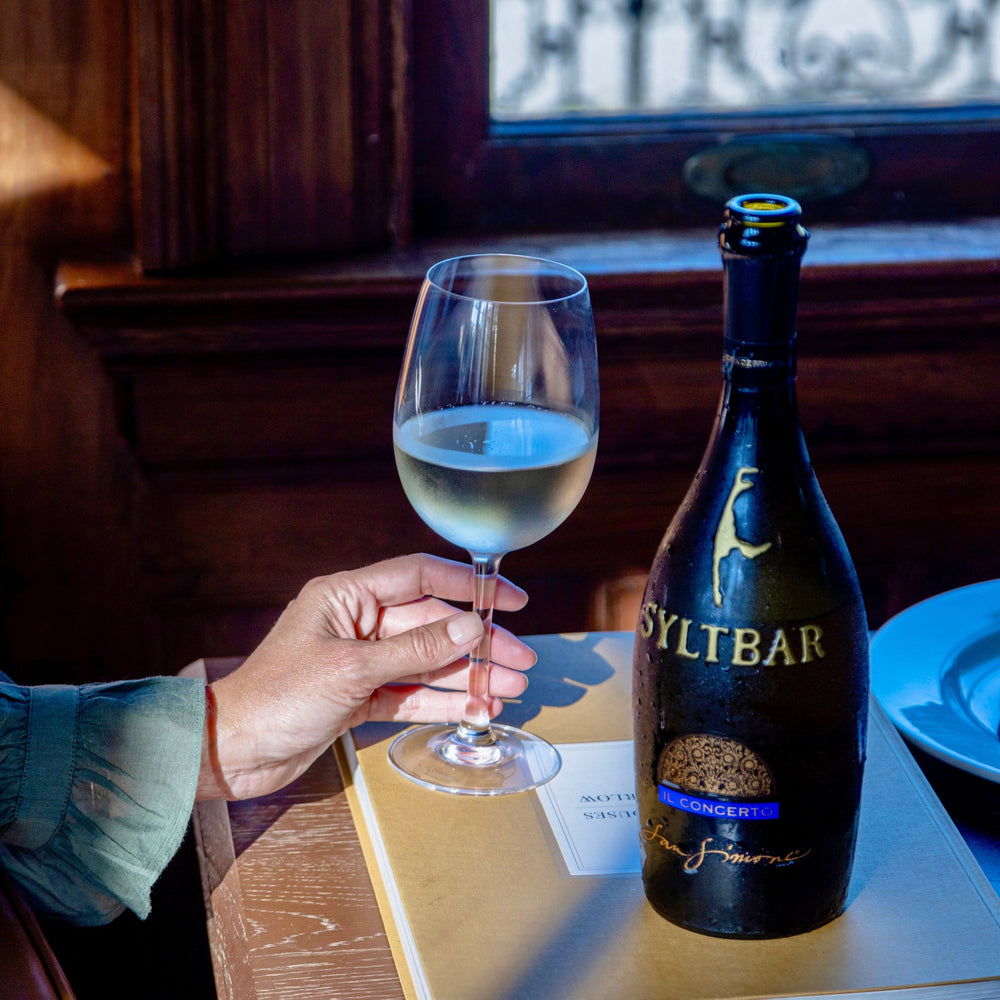
Alcoholic beverages, like desserts or not-so-great-for-you snacks, are often labeled as a “guilty pleasure” due to their calorie, carb and sugar content. But if Prosecco is your drink of choice, especially a clean crafted Prosecco, you might not need to be that worried. Enter the better-for-you bubbly, Mr SYLTBAR Premium Prosecco.
Is Prosecco the Lowest Calorie Wine?
Let’s talk calories. If you’re looking for a low-calorie sparkling wine, Prosecco is going to be your best bet. It’s typically lower in calories when compared to other sparkling wines. Prosecco is also typically lower in alcohol content. Alcohol equals calories, so less alcohol means less calories.
A standard 5 ounce glass of Prosecco is usually about 80 calories and 11% ABV (alcohol by volume). But these numbers can absolutely fluctuate depending on the amount of sugar used to enhance its flavor and shelf-life. Many mass-produced Prosecco and wine producers choose to skip the long fermentation process because it costs money. Instead, they add additional sugar and sweeteners to the juice to enhance the flavor, since the grapes didn’t fully develop. This cuts costs and saves time, which allows them the ability to produce a significant amount of produce to mass distribute and make more money. This is why so many Prosecco brands have 11% alcohol content — proof of that mass production.
Finding a natural low-calorie Prosecco that has 11.5% alcohol is few and far between, which is what makes SYLTBAR so special. This is because our producers use a longer fermentation time that allows the grape to fully develop and mature in a natural state. It’s the same for other types of fruit. For example, a mature strawberry that has been naturally grown is going to taste so much better than an immature strawberry.
There are no government requirements to showcase nutrition facts on a bottle of Prosecco, but there is one thing to look for on the label that can give you a rough idea of how much sugar is in that particular bottle, and the amount of sugar also indicates whether it’s high or low in calories.
There are six main types of Prosecco, ranging from driest to sweetest: Brut Nature, Extra Brut, Brut, Extra Dry, Dry, and Demi Sec.
Brut Nature is extremely dry, sometimes not even palatable, so it is not typically available nor drunk. Extra Brut and Brut are going to be the drier categories, and that shows that there is little to no added sugars, and little residual sugar left over from grapes during fermentation as well. Despite Extra Dry and Dry using the word “dry,” these wines are going to have more sugar, and that means more calories too.
So, while Prosecco is the best option for low-sugar sparkling wine, the type of Prosecco makes all the difference.

Can I Drink Prosecco on a Diet?
One of the reasons we do not like to use the word diet is because it implies that there are strong restrictions and limitations to what you can and can’t have — and that’s not how we like to live. We believe that living a healthy lifestyle can include anything and everything that you like to eat and drink, so long as you don’t overindulge, maintain an exercise routine, and get an adequate amount of sleep each night. You should not have to deprive yourself of the things you love, wine included. Having a healthy Prosecco option, like SYLTBAR, makes it so you never have to.
If your goal is to slim down or simply revamp your drinking habits, look for a Brut Prosecco option that is also known to be a clean-ingredient sparkling wine. That means no chemicals or additives, and no added sugars or sulfites. You want a wellness-focused wine brand that puts the consumer at the forefront of its production.
A Brut no-additive Prosecco is always a better choice than other alcoholic beverages, such as beer or other types of wine, because of its low calorie and sugar content. But mindful drinking Prosecco practices are important. Remember that when drunk in large quantities or mixed with high-calorie and high-sugar beverages, the calories and sugar do add up.

What Brand of Prosecco Has the Lowest Calories?
We’ve mentioned that a typical 5-ounce glass of Brut Prosecco is around 80 calories, but if you’ve been following SYLTBAR for a while, you know that Mr is anything but typical. SYLTBAR is the best clean-crafted Prosecco for dieting. It’s the brand of Prosecco with the lowest amount of calories and sugar in the industry.
We know this because Mr Premium Prosecco and Mrs Sparkling Rosé have both been lab tested by the University of Miami Diabetes Research Institute and shown to have a significant amount less sugar content than other well known sparkling wine brands. Mr and Mrs have also been approved as Weight Watchers friendly, having only 2 SmartPoints. When it comes to low-sugar sparkling wine options, Mr and Mrs are the winners.
Mr has 49 calories per 6 ounces and 0.3 grams of sugar per 6-ounce serving and Mrs is 63 calories per 6-ounce glass and 0.45 grams of sugar. We believe in a bigger portion for each serving because of how low the calories are. Both of these low-calorie sparkling wine choices come in at 11.5% ABV, which is a bit higher than the standard glass of Prosecco.
Download Mr & Mrs Calorie Comparison
Shop for Low Calorie Prosecco
You can still enjoy drinking Prosecco even if you are on a diet, especially if you are drinking SYLTBAR. Shop for natural low-calorie Prosecco on our online store, or check our store locator to find wine retailers in your area that carry Mr and Mrs. Cheers to a better-for-you bubbly!
 Back to Wine


Featured product

Featured product

It is time for SYLTBAR order now!



or text CONNECT to 1-833 461-3379
MIGHT TAKE UP TO A MINUTE TO RECEIVE CODE TEXT! By texting CONNECT to us, you consent to receive marketing text messages through an automatic telephone dialing system at the number provided. Consent is not a condition to purchase. Text STOP to unsubscribe or HELP for help. Msg and data rates may apply. Read our privacy policy

